 Add to Chrome
 Add to Firefox
 Add to Edge
AgentWard: A Lifecycle Security Architecture for Autonomous AI Agents
Apr 27, 2026
Autonomous AI agents extend large language models into full runtime systems that load skills, ingest external content, maintain memory, plan multi-step actions, and invoke privileged tools. In such systems, security failures rarely remain confined to a single interface; instead, they can propagate across initialization, input processing, memory, decision-making, and execution, often becoming apparent only when harmful effects materialize in the environment. This paper presents AgentWard, a lifecycle-oriented, defense-in-depth architecture that systematically organizes protection across these five stages. AgentWard integrates stage-specific, heterogeneous controls with cross-layer coordination, enabling threats to be intercepted along their propagation paths while safeguarding critical assets. We detail the design rationale and architecture of five coordinated protection layers, and implement a plugin-native prototype on OpenClaw to demonstrate practical feasibility. This perspective provides a concrete blueprint for structuring runtime security controls, managing trust propagation, and enforcing execution containment in autonomous AI agents. Our code is available at https://github.com/FIND-Lab/AgentWard .

HabitatAgent: An End-to-End Multi-Agent System for Housing Consultation
Apr 01, 2026Housing selection is a high-stakes and largely irreversible decision problem. We study housing consultation as a decision-support interface for housing selection. Existing housing platforms and many LLM-based assistants often reduce this process to ranking or recommendation, resulting in opaque reasoning, brittle multi-constraint handling, and limited guarantees on factuality. We present HabitatAgent, the first LLM-powered multi-agent architecture for end-to-end housing consultation. HabitatAgent comprises four specialized agent roles: Memory, Retrieval, Generation, and Validation. The Memory Agent maintains multi-layer user memory through internal stages for constraint extraction, memory fusion, and verification-gated updates; the Retrieval Agent performs hybrid vector--graph retrieval (GraphRAG); the Generation Agent produces evidence-referenced recommendations and explanations; and the Validation Agent applies multi-tier verification and targeted remediation. Together, these agents provide an auditable and reliable workflow for end-to-end housing consultation. We evaluate HabitatAgent on 100 real user consultation scenarios (300 multi-turn question--answer pairs) under an end-to-end correctness protocol. A strong single-stage baseline (Dense+Rerank) achieves 75% accuracy, while HabitatAgent reaches 95%.
A Novel Low-Complexity Dual-Domain Expectation Propagation Detection Aided AFDM for Future Communications
Mar 31, 2026This paper presents a dual-domain low-complexity expectation propagation (EP) detection framework for affine frequency division multiplexing (AFDM) systems. By analyzing the structural properties of the effective channel matrices in both the time and affine frequency (AF) domains, our key observation is the domain-specific quasi-banded sparsity patterns, including AF-domain sparsity under frequency-selective channels and time-domain sparsity under doubly-selective channels. Based on these observations, we develop an AF-domain EP (EP-AF) detector for frequency-selective channels and a time-domain EP (EP-T) detector for doubly-selective channels, respectively. By performing iterative inference in the time domain using the Gaussian approximation, the proposed EP-T detector avoids inverting the dense channel matrix in the AF domain. Furthermore, the proposed EP-AF and EP-T detectors leverage the aforementioned quasi-banded sparsity of the AF domain and time domain channel matrices, respectively, to reduce the complexity of matrix inversion from cubic to linear order. Simulation results demonstrate that the proposed low-complexity EP-AF detector achieves nearly identical error rate performance to its conventional counterpart, while the proposed low-complexity EP-T detector offers an attractive trade-off between detection performance and complexity.
Antenna Elements' Trajectory Optimization for Throughput Maximization in Continuous-Trajectory Fluid Antenna-Aided Wireless Communications
Mar 27, 2026Fluid antenna (FA) systems offer novel spatial degrees of freedom (DoFs) with the potential for significant performance gains. Compared to existing works focusing solely on optimizing FA positions at discrete time instants, we introduce the concept of continuous-trajectory fluid antenna (CTFA), which explicitly considers the antenna element's movement trajectory across continuous time intervals and incorporates the inherent kinematic constraints present in practical FA implementations. Accordingly, we formulate the total throughput maximization problem in CTFA-aided wireless communication systems, addressing the joint optimization of continuous antenna trajectories in conjunction with the transmit covariance matrices under kinematic constraints. To effectively solve this non-convex problem with highly coupled optimization variables, we develop an iterative algorithm based on block coordinate descent (BCD) and majorization-minimization (MM) principles with the aid of the weighted minimum mean square error (WMMSE) method. Finally, numerical results are presented to validate the efficacy of the proposed algorithms and to quantify the substantial total throughput advantages afforded by the conceived CTFA-aided system compared to conventional fixed-position antenna (FPA) benchmarks and alternative approaches employing simplified trajectories.
PAPR-Aware Waveform Design for Energy-Efficient MIMO-OFDM SWIPT
Mar 19, 2026Simultaneous wireless information and power transfer (SWIPT) critically depends on waveform design, which governs both reliable data delivery and efficient energy harvesting. Among waveform characteristics, the peak-to-average power ratio (PAPR) plays a pivotal role: low-PAPR signals improve power amplifier (PA) efficiency, while high-PAPR signals exploit rectifier nonlinearities to boost harvested energy. This duality makes PAPR a fundamental design challenge in SWIPT systems. To tackle this issue, we establish a unified analytical framework that characterizes the PAPR-dependent behaviors of both the PA and the rectifier, thereby revealing how waveform statistics determine end-to-end energy transfer efficiency. Building on this insight, we propose a frequency-domain resource allocation strategy for power-splitting SWIPT, where spectral segments are adaptively assigned to balance communication throughput with energy harvesting performance. Here, a key contribution is to extend SWIPT to MIMO-OFDM architectures. Despite concerns over excessive PAPR in large-scale antenna-subcarrier configurations, we demonstrate that appropriate waveform adaptation and resource optimization can transform MIMO-OFDM into an energy-efficient platform for joint data and power transfer. Finally, simulation results confirm significant improvements in PA efficiency, rectifier output, and overall energy transfer, thereby validating the practical benefits of the proposed approach.
Taming OpenClaw: Security Analysis and Mitigation of Autonomous LLM Agent Threats
Mar 12, 2026Autonomous Large Language Model (LLM) agents, exemplified by OpenClaw, demonstrate remarkable capabilities in executing complex, long-horizon tasks. However, their tightly coupled instant-messaging interaction paradigm and high-privilege execution capabilities substantially expand the system attack surface. In this paper, we present a comprehensive security threat analysis of OpenClaw. To structure our analysis, we introduce a five-layer lifecycle-oriented security framework that captures key stages of agent operation, i.e., initialization, input, inference, decision, and execution, and systematically examine compound threats across the agent's operational lifecycle, including indirect prompt injection, skill supply chain contamination, memory poisoning, and intent drift. Through detailed case studies on OpenClaw, we demonstrate the prevalence and severity of these threats and analyze the limitations of existing defenses. Our findings reveal critical weaknesses in current point-based defense mechanisms when addressing cross-temporal and multi-stage systemic risks, highlighting the need for holistic security architectures for autonomous LLM agents. Within this framework, we further examine representative defense strategies at each lifecycle stage, including plugin vetting frameworks, context-aware instruction filtering, memory integrity validation protocols, intent verification mechanisms, and capability enforcement architectures.
"Are You Sure?": An Empirical Study of Human Perception Vulnerability in LLM-Driven Agentic Systems
Feb 24, 2026Large language model (LLM) agents are rapidly becoming trusted copilots in high-stakes domains like software development and healthcare. However, this deepening trust introduces a novel attack surface: Agent-Mediated Deception (AMD), where compromised agents are weaponized against their human users. While extensive research focuses on agent-centric threats, human susceptibility to deception by a compromised agent remains unexplored. We present the first large-scale empirical study with 303 participants to measure human susceptibility to AMD. This is based on HAT-Lab (Human-Agent Trust Laboratory), a high-fidelity research platform we develop, featuring nine carefully crafted scenarios spanning everyday and professional domains (e.g., healthcare, software development, human resources). Our 10 key findings reveal significant vulnerabilities and provide future defense perspectives. Specifically, only 8.6% of participants perceive AMD attacks, while domain experts show increased susceptibility in certain scenarios. We identify six cognitive failure modes in users and find that their risk awareness often fails to translate to protective behavior. The defense analysis reveals that effective warnings should interrupt workflows with low verification costs. With experiential learning based on HAT-Lab, over 90% of users who perceive risks report increased caution against AMD. This work provides empirical evidence and a platform for human-centric agent security research.
Automating Agent Hijacking via Structural Template Injection
Feb 18, 2026Agent hijacking, highlighted by OWASP as a critical threat to the Large Language Model (LLM) ecosystem, enables adversaries to manipulate execution by injecting malicious instructions into retrieved content. Most existing attacks rely on manually crafted, semantics-driven prompt manipulation, which often yields low attack success rates and limited transferability to closed-source commercial models. In this paper, we propose Phantom, an automated agent hijacking framework built upon Structured Template Injection that targets the fundamental architectural mechanisms of LLM agents. Our key insight is that agents rely on specific chat template tokens to separate system, user, assistant, and tool instructions. By injecting optimized structured templates into the retrieved context, we induce role confusion and cause the agent to misinterpret the injected content as legitimate user instructions or prior tool outputs. To enhance attack transferability against black-box agents, Phantom introduces a novel attack template search framework. We first perform multi-level template augmentation to increase structural diversity and then train a Template Autoencoder (TAE) to embed discrete templates into a continuous, searchable latent space. Subsequently, we apply Bayesian optimization to efficiently identify optimal adversarial vectors that are decoded into high-potency structured templates. Extensive experiments on Qwen, GPT, and Gemini demonstrate that our framework significantly outperforms existing baselines in both Attack Success Rate (ASR) and query efficiency. Moreover, we identified over 70 vulnerabilities in real-world commercial products that have been confirmed by vendors, underscoring the practical severity of structured template-based hijacking and providing an empirical foundation for securing next-generation agentic systems.
How Many Pinching Antennas Are Enough?
Dec 21, 2025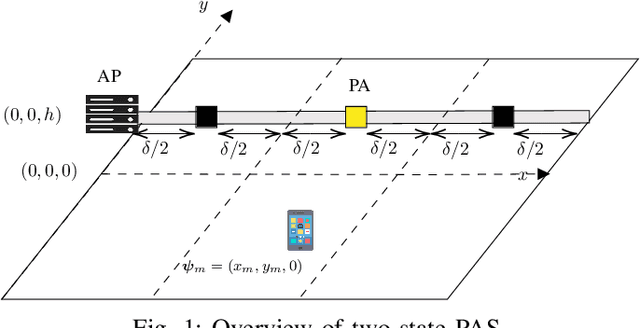
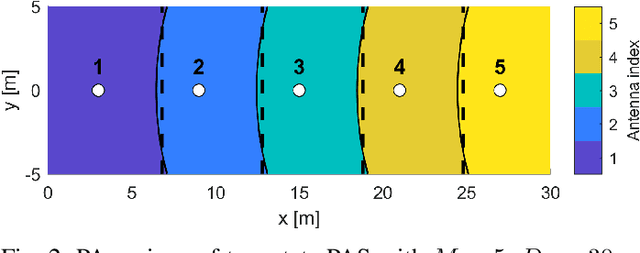
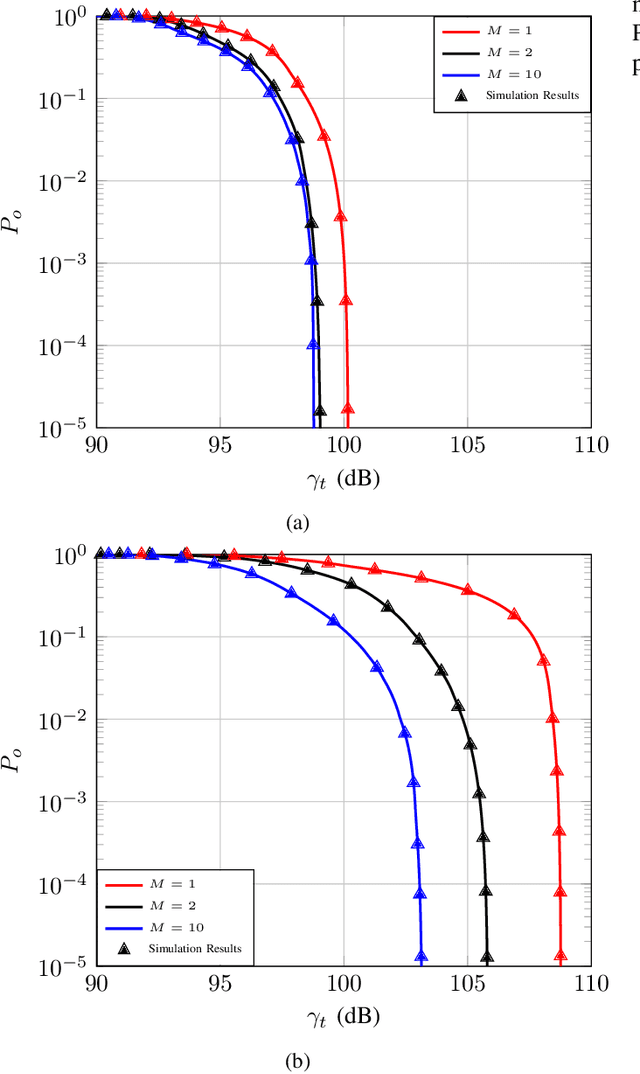
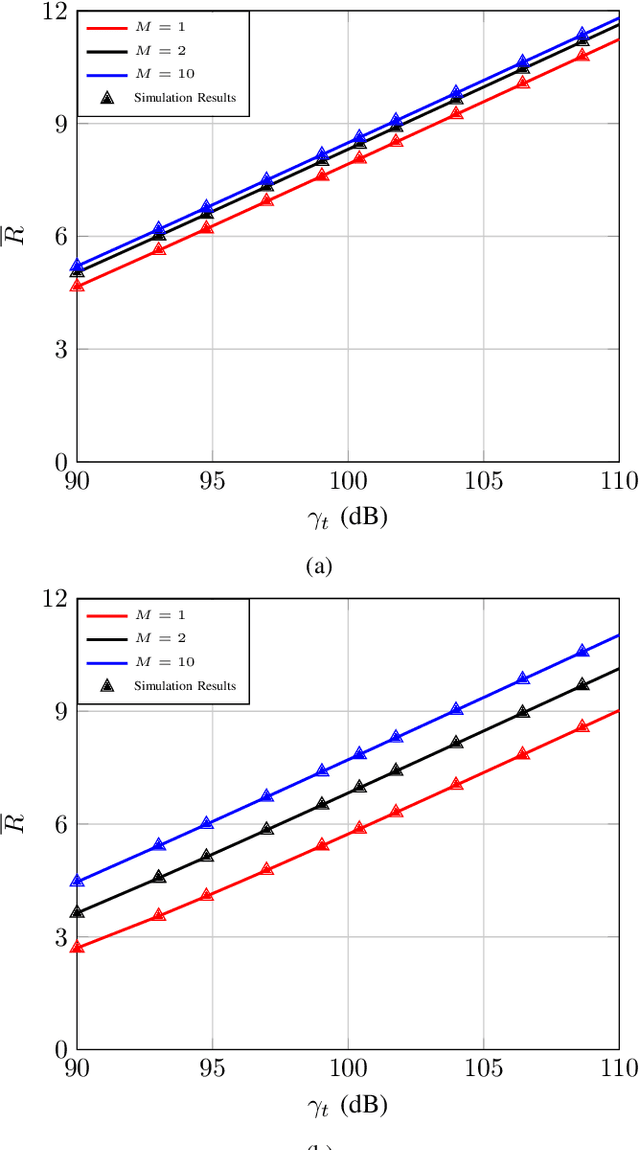
Programmable wireless environments (PWEs) have emerged as a key paradigm for next-generation communication networks, aiming to transform wireless propagation from an uncontrollable phenomenon into a reconfigurable process that can adapt to diverse service requirements. In this framework, pinching-antenna systems (PASs) have recently been proposed as a promising enabling technology, as they allow the radiation location and effective propagation distance to be adjusted by selectively exciting radiating points along a dielectric waveguide. However, most existing studies on PASs rely on the idealized assumption that pinching-antenna (PA) positions can be continuously adjusted along the waveguide, while realistically only a finite set of pinching locations is available. Motivated by this, this paper analyzes the performance of two-state PASs, where the PA positions are fixed and only their activation state can be controlled. By explicitly accounting for the spatial discreteness of the available pinching points, closed-form analytical expressions for the outage probability and the ergodic achievable data rate are derived. In addition, we introduce the pinching discretization efficiency to quantify the performance gap between discrete and continuous pinching configurations, enabling a direct assessment of the number of PAs required to approximate the ideal continuous case. Finally, numerical results validate the analytical framework and show that near-continuous performance can be achieved with a limited number of PAs, offering useful insights for the design and deployment of PASs in PWEs.
Two-Dimensional Pinching-Antenna Systems: Modeling and Beamforming Design
Nov 12, 2025


Recently, the pinching-antenna system (PASS) has emerged as a promising architecture owing to its ability to reconfigure large-scale path loss and signal phase by activating radiation points along a dielectric waveguide. However, existing studies mainly focus on line-shaped PASS architectures, whose limited spatial flexibility constrains their applicability in multiuser and indoor scenarios. In this paper, we propose a novel two-dimensional (2D) pinching-antenna system (2D-PASS) that extends the conventional line-shaped structure into a continuous dielectric waveguide plane, thereby forming a reconfigurable radiating plane capable of dynamic beam adaptation across a 2D spatial domain. An optimization framework is developed to maximize the minimum received signal-to-noise ratio (SNR) among user equipments (UEs) by adaptively adjusting the spatial configuration of pinching antennas (PAs), serving as an analog beamforming mechanism for dynamic spatial control. For the continuous-position scenario, a particle swarm optimization (PSO)-based algorithm is proposed to efficiently explore the nonconvex search space, while a discrete variant is introduced to accommodate practical hardware constraints with limited PA placement resolution. Simulation results demonstrate that the proposed 2D-PASS substantially improves the minimum SNR compared with conventional line-shaped PASS and fixed-position antenna (FPA) benchmarks, while maintaining robustness under varying user distributions and distances.